
Why remembering more doesn't make AI smarter. What makes an agent good at its job is how its information is organized, and that matters as agents shape what consumers discover and buy.
Photographic Memory
My high school English teacher once told us about a student with an extraordinary ability to remember information. He could look at a piece of music and recall it in remarkable detail. According to my teacher, this helped him become an accomplished classical musician because memorizing sheet music came so naturally.
Whether this was truly photographic memory is debatable, but the story raises an interesting question: If you could remember everything, would that necessarily make you more intelligent?
This question is increasingly relevant as AI developers race to build better memory systems for AI agents. Digital systems can preserve enormous amounts of information, often with greater precision and persistence than human recollection. Yet the amount of information isn't what makes an agent good at its job. How that information is organized is.
The challenge is not simply remembering more. It is organizing information so the right pieces can be retrieved and applied. For businesses, that distinction matters as AI agents increasingly influence what consumers discover, compare, and purchase.
How Does AI Memory Work?
Three connected capabilities determine how effectively an AI agent uses information:
Memory: What does AI know? Information retained in model parameters, external knowledge stores, and prior interactions.
Retrieval and context: What does AI need now? The ability to find relevant information and assemble it for a particular task.
Reasoning: What should AI conclude? The ability to interpret facts, evaluate relationships and conditions, and reach a decision.
These capabilities are related, but reasoning is not itself a form of memory. Human recollection uses associations and experiences; AI systems can use search, embeddings, metadata, and other mechanisms to retrieve external information. Both can fail to apply available information correctly.
Why More Memory Alone Doesn't Make AI Smarter
More information does not necessarily improve AI performance, particularly when relevant facts are buried in long, conflicting, or poorly structured context. Researchers have documented a related effect: the 2023 "Lost in the Middle" study found that language models can become less accurate when relevant information appears in the middle of a long input. Even when the correct answer is present, a model can overlook it or apply it incorrectly.
Consider a traveler who asks an agent: "Find a hotel in Chicago for my family of five, with connecting rooms, complimentary breakfast, and a pool." An agent with access to thousands of hotel facts can still recommend the wrong room if it fails to connect occupancy limits, bedding configurations, and connecting-room policies. The information was available; the failure was in retrieval, organization, or reasoning.
For businesses, these are not just technical errors. An AI agent that misunderstands a product's attributes, eligibility, or availability may recommend the wrong product, overlook a better alternative, or fail to complete a transaction.
The next frontier of AI memory isn't remembering more. It's organizing information so AI can retrieve the right pieces and use them in a decision.
Helping AI Reason Better Is the Job of the Context Layer
A context layer is not a passive data store. Traditional enterprise infrastructure was engineered to store, process, and display data for people or conventional applications. An AI context layer organizes and supplies authoritative, relevant information to support interpretation, validation, and action. Retrieval determines whether an AI agent finds the right information; context helps make that information understandable and usable for reasoning.
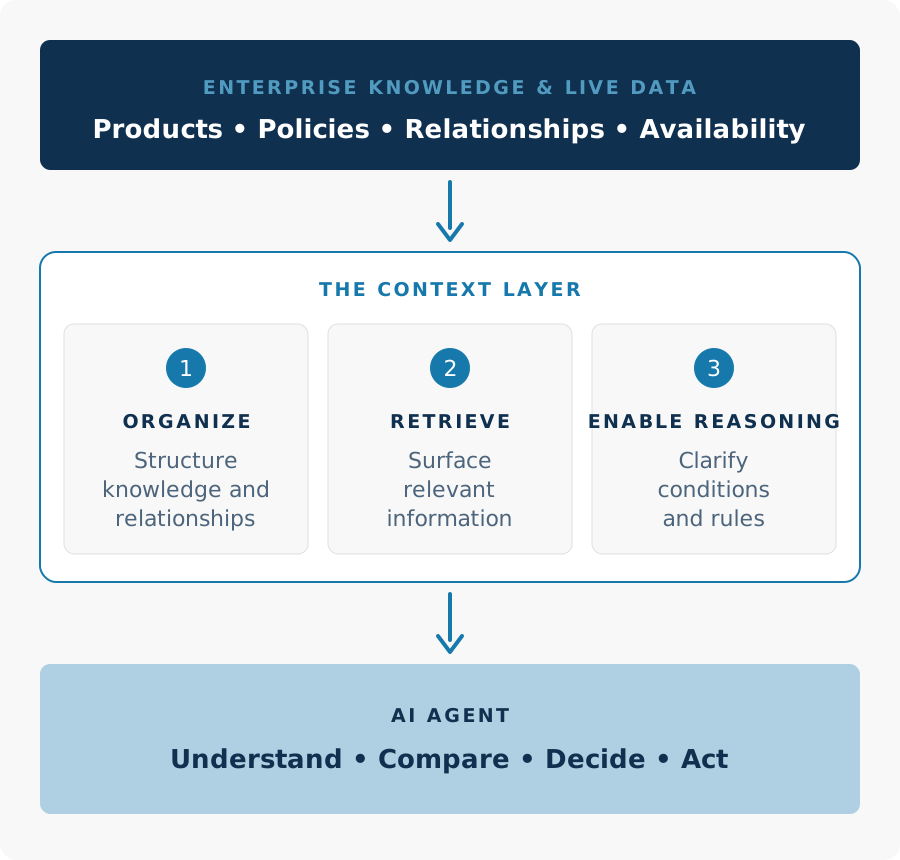
Figure 1. The context layer supports, rather than replaces, agent reasoning.
- Organize and Preserve What Matters: AI models may lack current, property-specific information. A context layer makes that knowledge available at runtime, including relationships, policy rules, source authority, and freshness, without changing the model itself.
- Retrieve the Right Context: A hotel property may have thousands of attributes. For our family of five, the relevant context includes occupancy limits, connecting-room eligibility, breakfast inclusions, amenity access, and applicable rates.
- Reduce Guesswork and Improve Reasoning: Knowing a hotel has suites, connecting rooms, and breakfast does not establish which rooms connect or which rates include breakfast. Explicit relationships and constraints reduce the assumptions an agent needs to make.
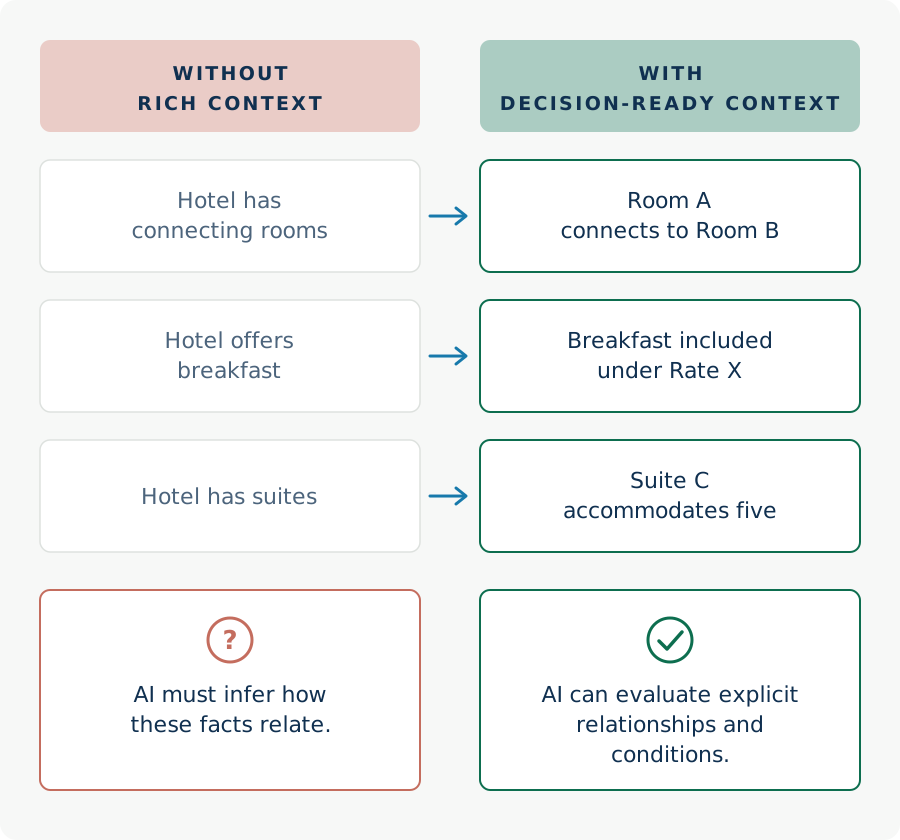
Figure 2. Specific relationships make facts more useful for decisions.
The context layer does not make the underlying model inherently smarter or guarantee correct conclusions. It can, however, reduce ambiguity and give the model a stronger basis for reasoning.
What Should Businesses Do Now?
For decades, companies built websites, databases, content systems, and APIs primarily around how people and conventional software consume information. AI agents introduce a different requirement: information must be useful in the context of a decision.
Focus on completeness and granularity. Publish detailed product attributes, configurations, restrictions, eligibility, pricing, and availability, not just broad descriptions. A traveler may need to know exactly which suite accommodates five guests and which promotions apply.
Organize relationships, not just attributes. Show which rooms connect, which rates include breakfast, and how benefits relate to room types and booking conditions.
Make conditions and exceptions explicit. Represent when an offer applies, who qualifies, and which exclusions matter. Ambiguous fine print can lead to inaccurate recommendations.
Maintain authoritative, current information. Establish ownership, provenance, and update processes so agents can distinguish reliable current facts from conflicting or outdated claims.
Measure decisions. Evaluate whether agents accurately understand offerings, recommend suitable products, respect constraints, and help customers complete transactions.
The Competitive Advantage for Enterprises
As AI agents increasingly influence what consumers discover, compare, and purchase, businesses will compete not only on the quality of their products but also on how effectively AI can understand and recommend them.
The competitive advantage will not necessarily belong to companies with the most information. It will belong to those that make their knowledge most useful for AI decision-making. In an AI-driven economy, having the right information is no longer enough. What matters is whether AI can reason with it.
Research: Liu et al., "Lost in the Middle: How Language Models Use Long Contexts" (2023), arxiv.org/abs/2307.03172
The Context is where the Bonafide team shares insights, research, questions, and trends shaping how AI understands, recommends, and purchases travel.
